.webp)





Showing candor means being open, honest, and straightforward when communicating - even if that’s tricky sometimes.
Demonstrating candor in your call center (and encouraging it among agents as part of their own personal development journey) helps improve communications by creating an honest, open workplace culture.
Plus, it drives employee morale and satisfaction, and can motivate your staff to be more productive, more receptive to feedback, and less likely to churn—a key benefit when average industry attrition rates are nearing 60%.
It’s your job to help bring out the best in your agents and foster a positive work environment where they’re engaged, positive, and willing to learn as they go. So, let’s explore how candor is the key to creating that atmosphere.
What is Candor? Meaning and Definition
Candor means being open, honest, and sincere when communicating with others. It’s the quality of expressing the truth respectfully - without exaggeration, hidden motives, or unnecessary softness. The word comes from the Latin candēre, meaning “to shine” or “to be bright,” symbolizing clarity and integrity.
In professional environments, candor helps people speak clearly, listen actively, and build trust. It’s a cornerstone of psychological safety - the idea that people perform better when they can share opinions and mistakes without fear of punishment.
In a call center context, candor transforms communication. When managers and agents are transparent with one another, feedback improves, customer experiences become more consistent, and teams feel empowered to perform at their best.
What does candor mean for call centers?
Candor is about embracing openness and honesty in every interaction.
That means a truthful, straightforward communication style and sincere feedback. It shows that you care personally and allows agents to feel seen and heard, while improving their emotional intelligence levels.
While this level of transparency can sometimes feel uncomfortable, it's essential for creating trust between people.
With a culture that promotes this openness, your team members can address issues head-on, cultivate a strong sense of togetherness, and build customer loyalty and trust. It’s tough at first, but radical candor is worth it - we promise.

Leadership expert Kim Scott, author of Radical Candor defines this as “Caring Personally and Challenging Directly.”
That’s exactly what call center leaders need to do: show care for their agents while being direct about performance and expectations.
When practiced effectively:
-
Agents feel safe to admit mistakes and ask for help.
-
Feedback becomes a two-way dialogue instead of a top-down critique.
-
Trust strengthens, morale rises, and customer interactions improve.
Candor doesn’t just improve communication - it builds resilience, loyalty, and measurable business results.
What candor isn’t
Candor is about honest, constructive communication, but it’s equally important to recognize what it isn’t.
Specifically, it’s not an excuse for negative behavior or withholding feedback until it’s too late.
If you do it wrong, you’ll end up damaging relationships and negatively impacting the workplace. So remember, candor is not:
- Personal criticism or attacks on an individual
- Being aggressive or overly blunt in communication
- Holding back feedback until it becomes overwhelming
- Focusing only on problems without suggesting solutions
- Using honesty as a shield for rude or disrespectful behavior
Why call center candor is important: 4 reasons
When you prioritize honest communication, you strengthen the relationships with your team and customers. Let’s take a look at why candor matters for call centers:
- Builds trust and psychological safety: When agents know they can speak openly without fear of retribution, you build a trusting environment. This feeling of safety empowers agents to share ideas and concerns, improving team cohesion and morale.
- Encourages candid and honest agents: By adopting transparency, you encourage people to be upfront with their successes and challenges. This helps them improve their problem-solving and service quality, and makes them more receptive to feedback.
- Supports a growth culture and mindset: It enables continuous learning and improvement, as agents will be less afraid of making mistakes. When feedback is honest and constructive, agents can focus on personal growth and developing their skills.
- Makes more impactful coaching sessions: Open communication leads to more effective coaching. Instead of skirting around issues, you can directly address areas for improvement, leading to quicker and more impactful change.

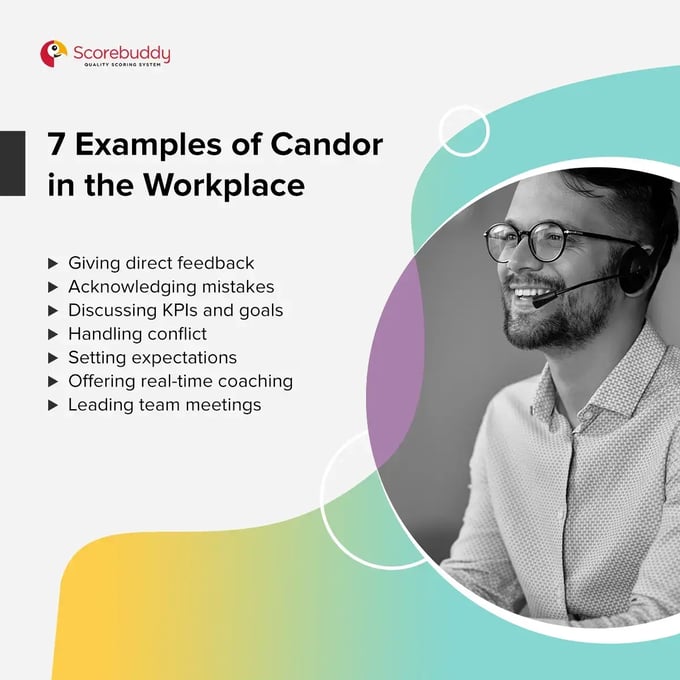
7 examples of candor in the workplace
Here are simple, everyday ways to show candor in your call center:
- Giving direct feedback: When an agent’s performance drops, address the issue immediately with clear, actionable feedback.
- Acknowledging mistakes: If a process error happens, be upfront with our team about what went wrong (and how it can be corrected).
- Discussing KPIs and goals: Be honest about the metrics your team is expected to meet, explaining where they currently stand and what they need to succeed.
- Handling conflict: When tensions arise, address the situation directly, creating an open discussion to help resolve misunderstandings (or escalations).
- Setting expectations: Clearly communicate the challenges and objectives of any new process or tool your team will be using.
- Offering real-time coaching: During live call monitoring, give agents immediate and honest feedback to help them improve on the spot.
- Leading team meetings: Encourage open dialogue with your agents by just being yourself, setting the tone for a culture where transparency is valued.
Candor works best when it’s modeled consistently - by leaders first.
How to create a culture of candor in your call center: 4 best practices
Building candor isn’t about a single conversation - it’s a continuous practice. Here’s how to foster it across your team:
You’re the leader, so take the lead
Your behavior sets the tone for the entire team. Be open, honest, and approachable in your daily interactions.
Show your team you aren’t afraid to make mistakes, never hide information, and share your expertise to help everyone learn.
Build candor into performance reviews and evaluation feedback
It’s important that you don't avoid unpleasant conversations or topics. Bite the bullet and deliver frank feedback - whether it’s positive or negative.
This helps build rapport in the long run. Open and constructive feedback leads to better engagement and performance within your team.
Have candid conversations with agents
Just talk to your agents and engage in open and honest conversation; it’s a two-way street.
Your agents should be allowed to be more candid, and their feedback can help you better understand your frontline operations and get fresh insights into customer needs and behaviors.
Make it immediate and actionable
Don’t wait until performance review time to tackle any issues.
Offer employees immediate feedback on what you want to address while the issues are still fresh in the mind, and focus on the actions they need to take to improve.
How to add candor to your coaching process
Embracing candor - which means being open, honest, and sincere—is essential to creating trust, transparency, and truthfulness within your call center. Without it, agents will be isolated, afraid to speak their minds, and less receptive to feedback.
So how can you use candor in your QA process? One way is through strengths-based coaching, where you can help agents meet their own goals while elevating your overall call center performance.
Try applying Radical Candor principles in your QA sessions:
-
Care personally: Start by recognizing what your agents do well.
-
Challenge directly: Give clear, specific guidance on what to improve.
-
Follow up: Make feedback part of an ongoing dialogue, not a one-time event.
This combination transforms QA from critique into collaboration - improving morale, retention, and performance metrics.
Want to try strengths-based coaching in your contact center?
Download our free eBook and see how it can transform your QA process.